How Do You Get Sticky Garbage Residue Out of a Trash Bin?
That sticky layer at the bottom of your trash bin usually comes from leaking bags, food waste, spilled liquids, grease, and other organic material that gets pressed against the plastic over time. A quick spray with a garden hose may remove loose debris, but dried or greasy residue often needs more contact time, agitation, and thorough rinsing.
For light buildup, you can usually handle the job yourself with water, a suitable cleaner, and a long-handled brush. When residue has hardened, spread across the interior walls, or keeps contributing to unpleasant odors, professional trash bin cleaning can provide a more thorough option.
Here is how to tackle the problem without damaging your bin or creating an even bigger mess.
Start by Removing Loose Material
Trying to scrub a bin while bits of garbage are still stuck inside makes the job harder.
Once the bin has been emptied, inspect the bottom, corners, lid, and interior walls. Remove loose paper, food scraps, leaves, packaging, and anything else that can be lifted out safely.
Wear household cleaning gloves, especially if you are dealing with old food residue or unidentified liquids.
If the sticky material has dried into a hard layer, avoid immediately scraping it with sharp metal tools. Aggressive scraping can scratch plastic surfaces and create rough areas where grime may collect more easily later.
Soften the Sticky Residue Before You Scrub
One of the most common mistakes is attacking dried garbage residue while it is still hard.
Wet the affected areas and give the water time to loosen the buildup. Depending on the type of residue, a cleaner labeled for washable plastic surfaces may also help break down grease and grime.
This is especially useful for messes caused by:
- sauces and food drippings
- grease
- sugary drinks
- spoiled produce
- leaking meat packaging
- pet waste bags
- wet garbage that has dried against the bin
Follow the cleaner manufacturer’s directions and confirm that the product is appropriate for the bin material.
Do not mix household cleaning chemicals. Combining products, particularly bleach with ammonia or certain other cleaners, can create dangerous fumes. The EPA also advises consumers to follow product instructions carefully rather than assuming homemade chemical combinations are safe.
Use a Long-Handled Brush for Stubborn Buildup
Once the residue has softened, physical agitation usually makes the biggest difference.
A long-handled scrub brush allows you to reach the bottom and lower corners without having to lean deep inside the bin. Pay particular attention to seams, grooves, the area around the wheels, and the underside of the lid.
Work from the cleaner areas toward the dirtiest spots so you are not spreading heavy residue across the entire interior.
For greasy buildup, you may need to repeat the wetting and scrubbing process rather than trying to remove everything in one aggressive pass.
Rinse Away the Loosened Material
After scrubbing, rinse the interior thoroughly so loosened grime and cleaner do not remain inside.
A garden hose can work well for this stage because the residue has already been softened and scrubbed. The important distinction is that rinsing alone and rinsing after agitation are not the same thing.
A hose may easily remove:
- loose dirt
- small food particles
- fresh spills
- residue that has already been loosened
It may struggle with sticky material that has bonded to the plastic over several trash cycles.
That is why bins can sometimes look better after a rinse but still feel greasy or smell unpleasant afterward.
Let the Bin Drain and Dry
After cleaning, tip the bin so excess water can drain.
Leaving standing water in the bottom creates another place for food particles and organic material to collect. It can also contribute to unpleasant smells once new garbage is added.
If practical, allow the bin to dry before putting another bag inside.
You do not need to make the bin perfectly dry every time, but avoiding a pool of leftover cleaning water at the bottom is a useful habit.
Why Sticky Garbage Residue Keeps Coming Back
Sometimes the cleaning method is not the real problem. The source of the buildup is still happening every week.
Sticky residue often returns because of repeated leaks.
Common causes include:
Garbage Bags That Tear or Leak
Thin or overloaded bags can split when they are lifted or when heavier waste presses against sharp packaging.
Once liquid escapes, it can travel directly to the bottom of the outdoor bin.
Loose Food Waste
Food placed directly into the trash cart can stick to the sides, especially if the material is wet or greasy.
Using a properly sized garbage bag and tying it securely can help reduce direct contact between waste and the bin.
Liquid Left in Containers
A partially full drink cup, sauce container, or food package can leak after it is tossed away.
Emptying excess nonhazardous liquid where appropriate before throwing the container away can reduce the amount that eventually reaches the bin floor.
Hot Weather
Food residue can break down more quickly during warm conditions, which may make odors and sticky organic buildup more noticeable.
That can be particularly relevant for households in Cecilia and other parts of south Louisiana, where bins may spend long periods outdoors between collection days.
Sticky Residue and Trash Bin Odor Often Go Together
A bin can continue smelling bad even after all visible garbage has been collected.
The problem may be the thin layer left behind.
Residue from food, grease, liquid waste, and other organic material can remain along the floor or walls. Simply removing the trash does not automatically remove that buildup.
Cleaning the actual bin surface gives you a better chance of reducing lingering odor.
Still, no cleaning method permanently prevents trash smells. New food waste, leaking bags, moisture, and other garbage can create new odors over time.
The goal is regular maintenance, not making a trash cart permanently odor-free.
What About Flies and Maggots?
Flies are attracted to accessible organic waste, particularly food residue.
If food or liquid remains stuck inside the bin after collection, it can continue providing an attractive environment even when the main garbage bag is gone.
Removing buildup and keeping the bin cleaner may make those conditions less attractive to flies, but bin cleaning is not pest control and cannot guarantee that insects will never return.
A few simple habits can help:
- Tie garbage bags securely
- avoid placing loose food directly in the cart
- clean up leaks instead of letting them sit through multiple collection cycles
- Keep the lid properly closed when possible
- address heavily soiled bins rather than repeatedly adding new garbage over old residue
DIY Rinsing vs Professional Trash Bin Cleaning
There is nothing wrong with cleaning a lightly soiled trash bin yourself.
A household cleaning may be perfectly reasonable when you have a manageable amount of residue, the proper tools, and somewhere appropriate to rinse and drain the bin.
The difference becomes more noticeable when buildup is heavy or when you want a more thorough cleaning process.
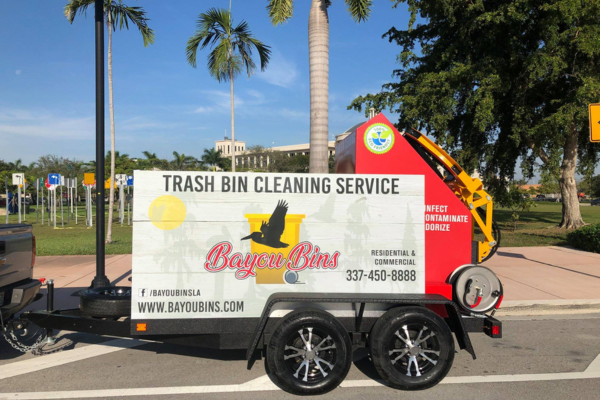
At Bayou Bins, we use a mobile system with 190-degree hot water and high-pressure spinning jets. Our process uses eco-friendly cleaning products and is designed to clean, sanitize, and deodorize trash and recycling bins. Our equipment allows us to clean bins curbside around the customer’s regular trash collection schedule.
This is different from ordinary household pressure washing. The system is specifically used as part of our bin-cleaning process, with bins loaded onto the cleaning equipment before the high-pressure cleaning stage.
Bayou Bins lists Cecilia, LA, among the communities in its service area.
How to Reduce Sticky Buildup Between Cleanings
Once your bin is clean, a few small changes can help keep heavy residue from developing as quickly.
Use bags that fit the amount of garbage you are throwing away. Overfilling makes tears and leaks more likely.
Double-bag unusually wet waste when appropriate. If you know something is likely to leak, an additional barrier may prevent a much larger cleanup later.
Do not ignore small spills. A fresh spill is often much easier to rinse or wipe away than the same material after several days of heat and drying.
Check the bottom after trash pickup. You do not need to deep clean the cart every collection day. A quick look can help you catch leaking material before another week’s garbage is placed on top of it.
Choose a cleaning frequency based on how your household uses the bin. Larger households, frequent food waste, repeated leaks, warm conditions, and strong odors may justify more frequent attention than a lightly used cart.
Useful Products and Resources for Handling Bin Residue
You do not need a cabinet full of specialty products to clean a trash bin, but a few practical resources can make the job easier.
Simple Green All-Purpose Cleaner
This concentrated cleaner is designed for dirt, grease, and stains on washable surfaces and is recognized by the EPA Safer Choice Program. The manufacturer advises users to follow its dilution instructions and spot-test surfaces when appropriate.
Simple Green Ready-To-Use All-Purpose Cleaner
For people who prefer not to measure a concentrated cleaner, this ready-to-use formula is another option for washable surfaces. It is intended for built-up dirt, food spills, grease, and grime.
Glad Trash Bags
Using bags that fit your household waste can help reduce some of the leaks that eventually create sticky residue inside an outdoor cart. Glad offers multiple bag sizes and styles, so the appropriate option depends on the indoor container and type of waste being discarded.
EPA Safer Choice Product Search
If you are comparing household cleaners, the U.S. Environmental Protection Agency provides a searchable list of products that meet its Safer Choice Standard.
Always read the manufacturer’s directions before using a cleaning product, confirm that it is appropriate for the surface, and never mix cleaning chemicals unless the labels specifically indicate that doing so is safe.
When Is Professional Cleaning Worth Considering?
You probably do not need professional service every time a drink spills inside a bin.
It becomes more useful when:
- residue covers a large part of the interior
- dried grime keeps surviving ordinary rinsing
- the bottom remains sticky after repeated DIY cleaning
- food residue is collecting around grooves and corners
- lingering odor remains after basic washing
- you would rather have the bin maintained on a recurring schedule
Bayou Bins currently offers monthly, every-two-month, quarterly, annual, and one-time cleaning options, giving households flexibility based on how often their bins need attention.
Because different household habits create different levels of buildup, there is no single cleaning frequency that every home must follow.
Frequently Asked Questions About Trash Bin Cleaning
Why should I use a professional bin cleaning service instead of washing my trash cans myself?
A professional bin cleaning service gives your trash cans a much deeper clean than a quick spray with a garden hose. Bayou Bins uses specialized equipment, hot water, and high pressure to remove stuck-on grime, food residue, odors, and other mess from inside your trash bins.
Regular household pressure washing or rinsing can make cans look better, but it may leave residue behind. Our professional service is designed specifically for trash bin cleaning, helping you keep clean trash cans without having to handle the dirty job yourself.
A professional deep clean is especially helpful when your cans are smelly, sticky, or have gone several weeks without being properly washed.
How does the Bayou Bins cleaning process work?
The process is simple. After your regular trash collection, leave your empty bins at the curb. Our crew will arrive with a specialized self contained cleaning unit designed for professional bin cleaning.
The system uses 190-degree hot water and a high pressure cleaning spray to help remove tough buildup from the inside and outside of the cans. We focus on areas where food, liquid, and grime commonly collect, including the bottom, walls, and lid.
After cleaning, the bins are sanitized and treated to help deodorize them, leaving them clean and fresh. Our goal is strong cleaning performance without leaving another mess behind on your property.
Do you clean both trash and recycle bins?
Yes. Bayou Bins can provide cleaning for trash and recycle bins, including standard residential trash bins and recycle bins.
Having both your trash and recycle containers cleaned can be helpful because recycling containers can also collect spilled drinks, food residue, sticky containers, dirt, and odors. Many customers choose to have their recycle bins cleaned at the same time as their garbage cans so the whole bin area stays cleaner.
If you are not sure whether we can clean a certain type or size of container, contact our team before scheduling your services.
Are the cleaning products safe around my family and pets?
Bayou Bins focuses on an environmentally responsible cleaning process and uses eco-friendly cleaning products rather than relying on unnecessary harsh chemicals.
This is important when trash cans are kept near your home, garage, driveway, sidewalks, children, family, or pets. The hot-water system and specialized cleaning equipment do much of the tough work needed to sanitize and disinfect dirty bins.
Garbage residue can create conditions where germs and bacteria build up. These may include harmful bacteria associated with waste, such as Salmonella and E. coli. Cleaning cannot make a trash can permanently germ-free or prevent all viruses and bacteria from returning, but regular cleaning helps remove the grime and waste they can live in.
Where does the dirty water go after the bins are cleaned?
One advantage of using a professional self-contained cleaning unit is better control of the dirty water created during cleaning.
Instead of simply spraying a dirty can on the driveway and allowing residue to spread around the property, specialized bin-cleaning equipment is designed to manage the wastewater produced during the job.
That means less dirty runoff and less mess around your curb, driveway, or nearby sidewalks. It is also a cleaner approach for the surrounding environment than letting waste-filled water spread across the ground.
How often should I schedule trash bin cleaning?
The right schedule depends on how much trash your household produces, the number of people in your home, the local weather, whether you have pets, and how quickly your cans develop smell, sticky residue, or grime.
Some customers choose monthly service, while others prefer a bi-monthly plan, quarterly cleaning, annual service, or a one time cleaning. Bayou Bins offers different plans so you can choose the option that makes sense for your home.
If your trash cans regularly contain food waste, leaking bags, diapers, pet waste, or other tough garbage, more frequent cleaning may help keep them fresh. If your cans stay fairly clean, one cleaning every few months may be enough.
Regular service also makes it easier to prevent a large buildup instead of waiting until the cans become extremely smelly.
Can trash bin cleaning help with bad odors, germs, and bacteria?
Yes. A major reason people schedule professional trash bin cleaning is to deal with the residue that causes unpleasant odors and smell.
Even after the garbage truck empties your can, liquids, food, grease, and grime can remain on the plastic. That residue can support bacteria, attract insects, and make the bin smell again as soon as you open the lid.
Our cleaning process uses hot water and high-pressure equipment to remove that buildup before the bins are sanitized and deodorized. This can provide noticeable freshening compared with simply rinsing the can.
Keep in mind that new trash can always create new odors and germs. Cleaning does not permanently prevent bacteria from returning, which is why many customers prefer a recurring cleaning plan.
Do I need to be home when Bayou Bins cleans my cans?
In most cases, you do not need to stay home for the cleaning. Just make sure your empty cans are available at the curb according to your scheduled service instructions so our professional crew can reach them.
Bayou Bins works around normal trash collection schedules, making the service fast and convenient for homeowners. Once the job is complete, you can bring your clean cans back to their normal location.
If your pickup week changes because of holidays, severe Louisiana weather, or another issue, check your service information or contact the team for an update.
Customers in Lafayette, Cecilia, and other Bayou Bins service areas in Louisiana can contact Bayou Bins LLC to ask about availability, pricing, plans, or scheduling. If your online account or booking link provides an update button, you can also follow the instructions shown there to make available changes.
Whether you need a recurring pla
n or a one-time deep clean, th
e goal is simple: make it
easier to keep your cans
clean, control odors, and take pride in a cleaner area around your home and neighbors.

Get That Sticky Buildup Out of Your Bin
Sticky garbage residue is easiest to manage before several trash cycles turn it into a hardened layer. Remove loose waste, soften the buildup, scrub it with an appropriate tool and cleaner, rinse thoroughly, and prevent future leaks whenever possible.
For heavier residue or bins that need a more thorough cleaning, Bayou Bins provides professional trash bin cleaning for Cecilia, LA, and surrounding communities.
Call 337.450.8888 to discuss service, or Contact Us to request a quote.