Greasy Takeout Containers Leave More Behind Than Ordinary Household Waste
That empty takeout box may look harmless once dinner is finished, but the grease left inside can create a lasting mess in your garbage bin. Unlike ordinary dry household waste, greasy food containers can leave behind oily residue, food particles, and unpleasant odors that remain long after trash collection.
For homeowners in Lafayette, LA, and surrounding Acadiana communities, Louisiana’s warm, humid weather can make the problem more noticeable. Grease and leftover food can cling to the interior of a trash can, creating buildup that a simple rinse may not fully remove.
Understanding what happens after greasy containers enter your garbage bin can help you prevent stubborn odors, reduce residue, and decide when professional trash can cleaning makes sense.
Why Greasy Takeout Containers Create More Mess Than Regular Trash
Not all household waste affects your garbage bin in the same way.
Dry materials, such as paper towels, packaging, and empty boxes, generally leave less residue when properly bagged. Greasy takeout containers are different because they often contain cooking oils, sauces, food particles, and moisture.
Even when a container appears empty, small amounts of grease can remain on its surface. Once discarded, that residue can spread to other materials inside the trash bag.
Several common situations make greasy takeout waste particularly messy.
Grease Can Leak Through Damaged Trash Bags
A trash bag may appear secure when you place it in the bin. However, sharp container edges, heavy waste, or overfilling can create small tears that allow liquids to escape.
Cooking oils and sauces can then collect along the bottom of the garbage can, leaving sticky residue after the bag is removed.
Unlike loose dirt, oily buildup often requires more than water to remove effectively.
Leftover Food Can Stick to the Bin’s Interior
Takeout packaging often contains small pieces of meat, rice, noodles, vegetables, or other food scraps.
When these materials escape from a bag, they may stick to the bottom or sides of the bin.
As organic material breaks down, it can contribute to unpleasant odors, especially when moisture is present.
Greasy Residue Can Trap Other Debris
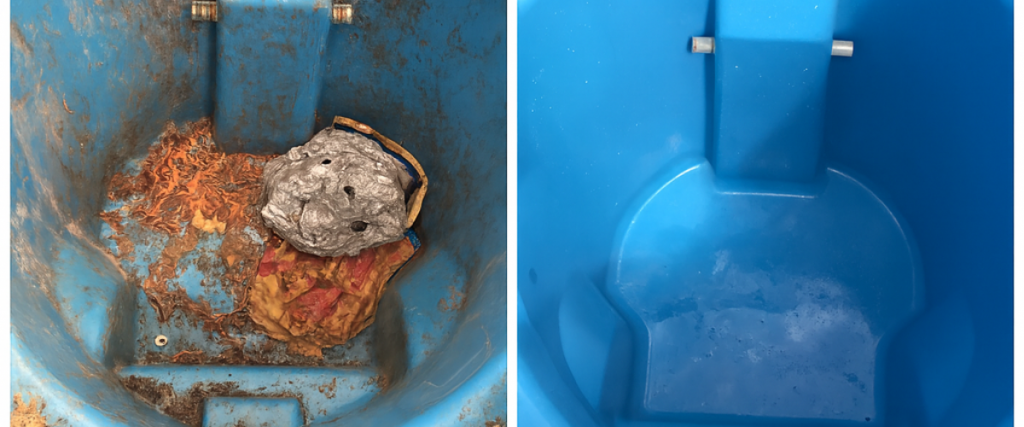
Grease creates a sticky surface that catches dust, dirt, and small pieces of garbage.
Over time, this combination can form a layer of grime that becomes increasingly difficult to remove with a quick rinse.
This explains why an emptied garbage can may still look dirty even after the collection truck has taken everything away.
Why Your Trash Can Still Smells After Garbage Pickup
Trash collection removes the contents of your bin, but it does not automatically remove the residue left behind.
Small amounts of grease, liquid waste, and food particles can remain trapped in corners, around the bottom edges, and along the interior walls.
These materials may continue producing unpleasant smells even when the trash can is completely empty.
The problem can become especially noticeable when you open the lid after the bin has been sitting in the sun.
Warm Weather Can Intensify Garbage Bin Odors
Lafayette’s hot, humid conditions can contribute to faster decomposition of food waste.
When greasy residue combines with moisture and leftover food particles, the resulting odors may become stronger between collection days.
Rainwater entering a bin with an improperly closed lid can make matters worse by mixing with existing residue.
Regular cleaning helps remove the materials responsible for many persistent garbage can odors rather than simply covering the smell.
How Greasy Food Packaging Can Attract Flies and Other Pests
A dirty garbage bin can become attractive to flies and other insects when food residue is present.
Greasy takeout containers often carry small amounts of organic waste, even when they appear empty.
Flies are attracted to decaying food and other organic materials. Under suitable conditions, they may lay eggs on accessible food waste.
Keeping your garbage bin cleaner can help reduce the conditions that attract these pests.
However, cleaning alone cannot guarantee that flies, ants, or other insects will never return, especially when new food waste is placed inside the bin.
For households dealing with recurring odors and residue, a professional trash can cleaning service can provide a more thorough cleaning than simply rinsing away loose debris.
Simple Ways to Prevent Grease Buildup in Your Garbage Bin
You cannot completely eliminate food waste from household trash, but a few practical habits can make greasy containers easier to manage.
Remove Excess Food Before Disposal
Scrape leftover food into the appropriate waste container before throwing away takeout packaging.
Avoid pouring excess cooking oil or greasy sauces directly into your garbage bin.
Reducing the amount of liquid and food residue inside discarded containers helps limit potential leaks.
Secure Greasy Containers Before Throwing Them Away
Close takeout containers whenever possible before placing them inside a garbage bag.
For particularly greasy packaging, consider wrapping the container in additional waste paper or placing it in a small, securely tied bag.
The goal is to reduce the chance of oily liquids spreading throughout the main trash bag.
Avoid Overfilling Garbage Bags
Overstuffed bags are more likely to tear when lifted or compressed.
Leave enough room to tie the bag securely and avoid forcing sharp packaging into an already full bag.
A properly closed bag provides an additional barrier between food waste and the interior of your garbage can.
Keep the Trash Can Lid Closed
A properly closed lid helps limit rainwater entering the bin and reduces easy access for insects and animals.
Check that bulky takeout containers are not preventing the lid from closing completely.
Clean Spills Before They Become Stubborn
If grease or food waste leaks into the bin, remove the residue promptly.
For minor spills, household cleaning with a bin-compatible detergent, water, and a suitable brush may be enough.
Always follow product instructions, avoid mixing cleaning chemicals, and dispose of dirty cleaning water appropriately.
Why a Garden Hose May Not Remove Stubborn Grease
A quick rinse with a garden hose can remove loose debris, some surface dirt, and certain fresh spills.
However, grease does not dissolve readily in plain water.
When oily residue has collected along the bottom of a bin, spraying it with cool water may move the grease around without thoroughly removing it.
Textured plastic surfaces, corners, and areas around the wheels can also retain grime.
Scrubbing with a suitable household cleaner can help with routine maintenance, but heavily soiled bins may require more time and effort.
Professional cleaning offers another option for households that want a more thorough cleaning without handling accumulated waste themselves.
How Professional Trash Can Cleaning Handles Greasy Residue
Greasy buildup is one reason professional bin cleaning can be useful beyond ordinary household rinsing.
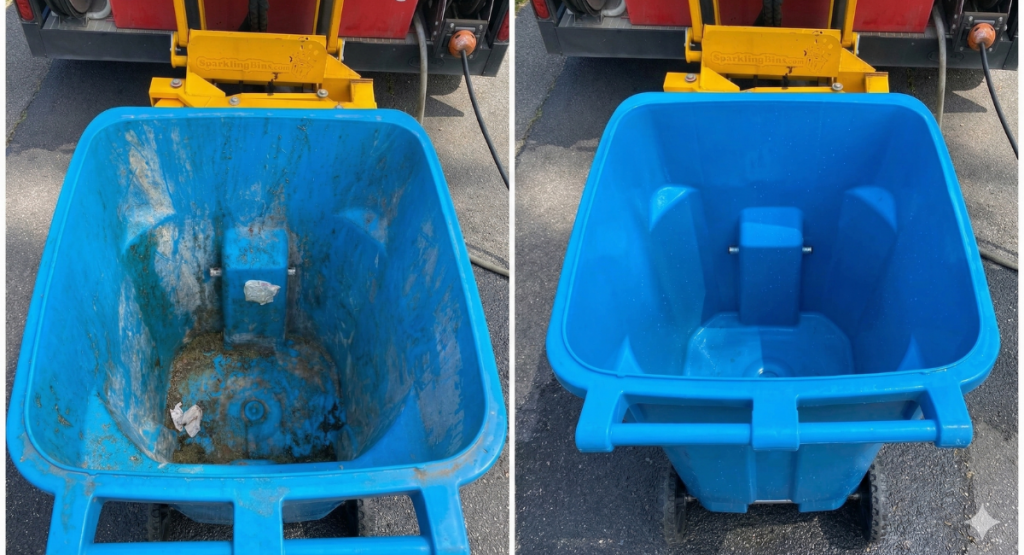
At Bayou Bins, we use a specialized cleaning system designed to wash, sanitize, and deodorize trash and recycling bins.
Our process includes hot water at approximately 190°F, high-pressure spinning jets, and eco-friendly cleaning products.
This combination helps loosen stubborn grime and remove residue from the bin’s interior.
Our cleaning system also collects wastewater within the truck for proper disposal, helping prevent dirty cleaning water from being left around the curb.
We clean members’ bins on their scheduled trash collection day after the containers have been emptied, making the service convenient for regular household maintenance.
Professional cleaning can address existing residue, but new grease and food waste can accumulate again with continued use.
Should Greasy Takeout Containers Go in the Trash or Recycling Bin?
Not every takeout container belongs in the garbage. Some packaging may be recyclable, depending on its material, food residue, and local recycling requirements.
Grease alone does not automatically make every cardboard container unsuitable for recycling.
For example, the U.S. Environmental Protection Agency explains that pizza boxes can often be recycled after food scraps are removed.
Plastic takeout containers may also be accepted when they are made from materials included in your local recycling program and are sufficiently clean.
Before recycling takeout packaging, check the rules for your community. Containers with significant leftover food or materials that your local program does not accept should be handled according to local disposal guidance.
Separating recyclable packaging from ordinary garbage may also reduce the amount of greasy waste entering your household trash bin.
Useful Products and Resources for Managing Greasy Household Waste
A few household products and reliable resources can make it easier to handle greasy takeout containers and reduce mess between garbage collection days.
Hefty Ultra Strong Kitchen Trash Bags
Hefty Ultra Strong Kitchen Trash Bags are designed to resist tears, punctures, and leaks during normal household use.
Choosing a properly sized, durable bag can help contain greasy food packaging and reduce the likelihood of spills inside your garbage bin.
Hefty Ultra Strong Large Trash Bags
Hefty Ultra Strong Large Trash Bags provide options for larger household waste loads.
They may be useful when disposing of bulky takeout packaging that could otherwise stretch or damage smaller garbage bags.
EPA Recycling Guidance
The U.S. Environmental Protection Agency’s recycling guide explains how to handle common recyclable materials, including cardboard and plastic food containers.
It is a useful starting point for understanding why removing food residue matters before placing packaging in a recycling bin.
EPA Tips for Improving Household Recycling
The EPA also provides practical recycling tips that emphasize keeping food and liquids out of recycling containers and following local recycling requirements.
These habits can help reduce contamination and unnecessary mess in household waste containers.
How Often Should You Clean a Trash Can That Holds Greasy Food Waste?
The right cleaning frequency depends on how much food waste your household produces and how quickly residue accumulates.
A household that frequently orders takeout or disposes of greasy leftovers may need more frequent cleaning than one that primarily generates dry waste.
Other factors include the number of people in the home, trash collection frequency, leaking bags, and outdoor temperatures.
At Bayou Bins, we offer monthly, every-two-months, quarterly, annual, and one-time cleaning options.
Monthly service can be useful for households that regularly deal with food-related residue, while occasional cleaning may suit bins that remain relatively clean between collection days.
A one-time cleaning can also help address a particularly messy bin after a leaking garbage bag or other spill.
You can explore our trash can cleaning service to find an option that matches your household’s maintenance needs.
Frequently Asked Questions About Greasy Takeout Containers and Trash Bins
What is Bayou Bins, and what cleaning services do you offer?
Bayou Bins is a local trash can cleaning service serving homeowners and businesses in Lafayette, LA, and surrounding Acadiana communities. We help customers keep their trash cans and recycling bins clean, fresh, and free from tough grime and unpleasant odors.
Our professional service includes washing, sanitizing, disinfecting, and deodorizing bins using specialized equipment. We take pride in doing the dirty job so you don’t have to. Whether you’re tired of smelly trash cans at home or need cleaner bins for your business, our team is here to help.
How does your trash can cleaning process work?
Our bin cleaning process is simple and convenient. After your city trash collection is complete, our team arrives with a self contained cleaning unit equipped with high pressure spinning jets and hot water heated to approximately 190°F.
We deep clean the inside of your trash and recycle bins, including the lid, to remove stuck-on grime, grease, and dirt. Our cleaning methods also help reduce harmful bacteria, germs, and odors. We then deodorize the cans to leave them smelling fresh.
The best part? Our equipment is designed to collect dirty water inside the truck, so we don’t leave a mess on your driveway, curb, or property. You get clean trash cans without having to handle the dirty work yourself.
How often should I have my trash cans cleaned?
It depends on how quickly your bins get dirty and how much trash your household produces. For most homeowners, regular cleaning is a great way to keep odors and buildup under control.
At Bayou Bins, we offer monthly, every-two-months, quarterly, annual, and one-time cleaning services. If you have a large family, pets, or frequently throw away food waste, monthly cleaning may be the better choice.
You can choose a cleaning schedule that works for your home or business. If you notice a strong smell, sticky residue, or dirty spots between visits, it may be time for another cleaning.
Do I need to be home when Bayou Bins arrives?
No, you don’t need to be home for your scheduled cleaning. Our team normally provides service on your trash collection day, after the collection truck has emptied your bins.
Simply leave your trash cans at the curb where our team can easily access them. We’ll take care of the cleaning process, so you can get on with your day.
If your city collection is delayed due to storms, bad weather, or a change in collection hours, please contact our team. You can send us a message so we can review your cleaning schedule and discuss any needed changes.
Can professional trash can cleaning remove bacteria, germs, and bad smells?
Yes! Our cleaning process is designed to wash, sanitize, disinfect, and deodorize dirty bins. We use hot water, high pressure spray equipment, and eco-friendly cleaning products to help remove grime, food residue, and the buildup that can produce unpleasant odors.
Trash cans can collect harmful bacteria, germs, and other unwanted contaminants, including some viruses, especially when food and liquids sit inside for days.
While no cleaning service can promise to remove every microorganism or prevent future buildup, a proper deep clean can make a big difference. Our goal is to leave your bins noticeably cleaner and help them smell great for your family, pets, and neighbors.
Do you clean recycling bins as well as regular trash cans?
Yes! Bayou Bins provides cleaning for both trash and recycle bins. Recycling bins can get just as dirty as regular trash bins, especially when they contain leftover liquids, food packaging, or sticky containers.
Whether you need your regular trash cans washed or your recycle bins cleaned, our equipment can help remove residue, grime, and unpleasant smells.
Having both your trash and recycle bins cleaned helps keep your curb and property looking better. It’s also a simple way to maintain a fresher environment around your home.
Is your trash can cleaning service safe for my driveway and the environment?
Our cleaning system is designed to reduce mess and handle wastewater responsibly. We use eco-friendly cleaning products along with a self contained cleaning unit that collects dirty water inside the truck for proper disposal.
Unlike washing trash cans with a garden hose, our process helps prevent dirty wastewater from being left on your driveway, sidewalk, or curb.
We also use targeted high pressure washing methods to clean tough buildup without requiring you to scrub the bins yourself. It’s a convenient option for customers who want clean cans while being mindful of their property and the environment.
How do I schedule a cleaning with Bayou Bins?
Scheduling your trash can cleaning is easy! Visit our website at www.bayoubins.com or contact us at 337-450-8888 to learn about our cleaning services.
Choose the service option that works best for you, whether it’s a one-time deep clean or regular cleaning throughout the year.
If you need to change your schedule, have a question about your collection week, or want to report a delayed trash pickup, send our team a message. If your booking page includes an update button, you can use that link to submit available changes.
Bayou Bins is proud to be serving Lafayette, LA, and nearby Acadiana communities. We know how frustrating smelly bins can be, and our job is to make keeping them clean as simple as possible. Our customers can spend less time dealing with dirty trash cans and more time enjoying a fresh, clean home.
Ready to get rid of the smell? Contact Bayou Bins today and let us handle the dirty work!
Keep Greasy Takeout Waste From Becoming a Lasting Problem
Greasy takeout containers may be convenient after a busy day, but the residue they leave behind can become a recurring problem for household garbage bins.
Cooking oils, sauces, moisture, and leftover food can create sticky buildup that remains even after your trash has been collected.
Taking a few precautions when disposing of greasy packaging can help reduce leaks, odors, and unnecessary cleaning.
For homeowners in Lafayette, LA, and nearby Acadiana communities, regular trash bin maintenance is especially useful during warm, humid weather.
At Bayou Bins, we help homeowners manage stubborn garbage can residue with professional cleaning, sanitizing, and deodorizing services.
If your trash bin continues to smell after collection or has accumulated greasy buildup, call us at 337.450.8888 or contact us to discuss a cleaning option that works for your household.